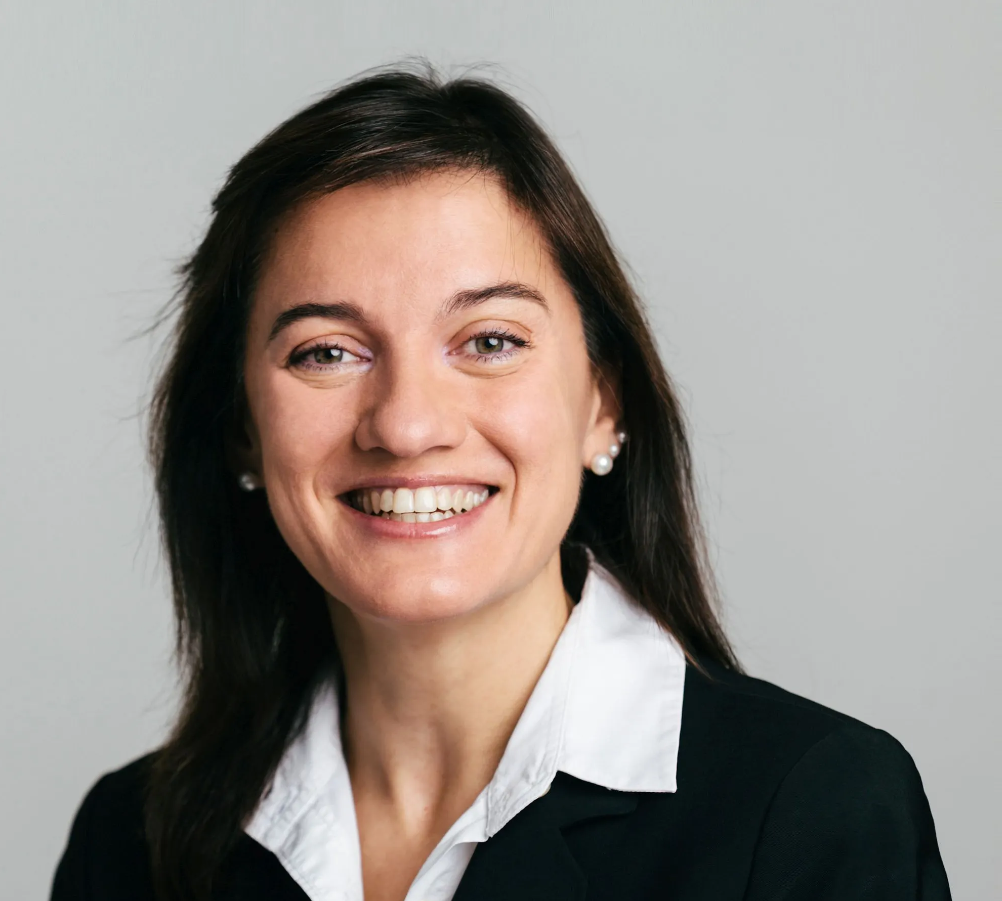
As a part of our series about “Why We Need More Women Founders”, I had the pleasure of interviewing Teresa Ramos.
Teresa Ramos is a seasoned leader with a diverse career spanning over 23 years in executive roles at top tech companies like British Telecom, Vodafone, Telefónica, and Siemens Group. She has driven digital transformations, enhanced organizational agility, and fostered innovation within and across departments.
After her extensive commercial experience, Teresa transitioned to academia, collaborating with leading institutions such as IE (Instituto de Empresa), d.school at Stanford University, and IoC at Harvard University. Her focus in academia has been on innovation, agility, leadership, digital transformation, and high-performance teams.
Currently, Teresa owns her own company and works as an executive coach and digital consultant, collaborating with prestigious organizations such as the United Nations, OECD, NHS, and a number of FORTUNE 500, FTSE100, DAX40, and IBEX35 companies, helping executives and companies navigate the complexities of the digital world and thrive in our fast-evolving, technology-driven landscape.
She is a Fellow at the IoC (Institute of Coaching at Harvard) and a member of the Advisory Council at HBR( Harvard Business Review).
Thank you so much for doing this with us! Before we dig in, our readers would like to get to know you a bit more. Can you tell us a bit about your “backstory”? What led you to this particular career path?
My first career was in technology. When I finished my first degree in theoretical physics, I moved from my native Spain to the UK for what was intended to be a brief 6-month internship at British Telecom. However, this experience evolved into an exciting 22-year executive career, during which I led teams globally for industry giants such as British Telecom, Vodafone, Telefónica, and Siemens.
When the company I was working for in Germany was bought by a Spanish company, I received an offer to return to my home country. However, transitioning back to Spain after spending over two decades abroad presented unexpected challenges. Having never worked in Spain, I did not understand the Spanish culture, the Spanish business language or the Spanish business etiquette!! This was deeply frustrating. After spending 22 years dreaming of “going back home”, moving back was extremely hard. After a few months and many deep conversations with family and close friends, I realized I didn’t want anyone to experience what I was going through. I wanted to help people thrive and be fulfilled at work so I decided to leave corporate life and retrain as an executive coach.
This is when I decided to start my own company. My vision was very clear and I was not willing to compromise on it.
Since then, I have made many mistakes, learnt a lot, had a lot of fun and met many fascinating people. Corporate life was interesting and fun and I learned vital lessons that helped me go my own way.
The main challenges I faced were changing my work identity and rebranding. When I left corporate life, I was responsible at a global level for Big Data in Telefonica, one of the top players in telecommunications. My whole network, both personal and professional, saw me as a technologist. It took me some time to create my new work identity.
Initially, it felt as though I had to choose between my tech and digital background and my new path. Over time, this unique combination offered a perspective that proved invaluable. Clients started to value the very rare blend of tech and digital expertise alongside my skills in coaching and leadership development. It took time and patience before the mix became increasingly sought after and now it is part of my unique value proposition.
Can you share the most interesting story that happened to you since you began your career?
There have been many. Being the only woman in the room has always provided plenty of opportunities for funny and interesting stories. Additionally, most of my career has been abroad, which meant that I was also “the foreigner” in the room, and, very often, the only foreigner. You add these two elements together and the potential for interesting stories increases exponentially.
It took me some time to realize that I could turn these two characteristics from a disadvantage to a big advantage. In time, they became part of my personal brand.
Can you share a story about the funniest mistake you made when you were first starting? Can you tell us what lesson you learned from that?
I started my career at the BT Research Labs in the UK. After a few years, I moved to Germany as an expat. My first job was as a project manager. I had never managed a project at work in my life!! I was terrified and did not know where to start, so I called my friends back in the UK. They all said the same to me “Teresa, you have been managing projects all your life!! Maybe not at work but you are the one who always organizes our parties, organizes our holidays, our trips to the cinema…. These are all projects, and you know how to do this!”. That helped me realize that, although I had never managed a project at work, I had indeed delivered other informal projects that had taught me valuable lessons.
The lesson I learned here is that, given a challenge, it pays to stop and think when you have done something similar. It could be at work or outside work. Chances are you have dome something similar in the past; surely a lot smaller, surely wit friends and family instead of customers… still, draw lessons from that experience and start getting ready for the challenge ahead!
None of us are able to achieve success without some help along the way. Is there a particular person who you are grateful towards who helped get you to where you are? Can you share a story about that?
There are many people who helped me along the way and to whom I am incredibly grateful. If I had to choose just one, it would be my mentor and now good friend Liz Brown. Liz is an incredible woman, deeply passionate about empowering and helping other women. She has been my mentor for almost 25 years and a great help both personally and professionally. She has listened deeply, given advice, provided introductions, suggested books and, above all, showed enormous understanding and support all these years. She has always believed in me and cheered me on. The world is a much better place because of Liz´s amazing energy and generosity. I am privileged to call her a friend.
Is there a particular book that made a significant impact on you? Can you share a story or explain why it resonated with you so much?
I am an avid reader and therefore have many books that have made a significant impact on me. Depending on where I am at, both personally and professionally, different books impact me at different times. At the moment, I am devouring books on neuroscience, how our brain works and the relationship between our brain and our body, including somatic experiencing and embodiment. “Behave” by Richard Sapolsky and “Neurociencia del cuerpo” by Nazareth Castellanos, a Spanish neuroscientist are current favorites. However, this is very likely to change soon as I am fast moving on to how this can be applied to AI and robotics on one side and to executive coaching and leadership development on the other.
Do you have a favorite “Life Lesson Quote”? Do you have a story about how that was relevant in your life or your work?
A favorite quote would be “The only way to make no mistakes is to do nothing”, which is my interpretation of Elbert Hubbard´s: “To avoid criticism, say nothing, do nothing, and be nothing.”
It is highly unlikely that you will do something right if you do it for the first time or if you have done it before but the circumstances have changed. We live in a highly complex world that is constantly changing at increasingly fast speed. The chances of us doing something new (either because it is the first time or because circumstances have changed) are very high. It is therefore important to become friends with taking risks and learning. And learning means making mistakes and failing.
To thrive in our complex and fast changing world it is vital to redefine our relationship to failure and embrace it as a necessary step in the learning process. It is not failing; it is a step in the learning process.
This is particularly relevant for founders as founders are trail blazers, with new ideas that have never been worked on or even dreamed about. As a founder, it is vital to keep this is mind to ensure you stay motivated.
I try to always keep this is mind and, whenever I make a mistake, I reflect on what I can learn from it from a place of playful curiosity. It is not about blaming but about learning. Then I laugh it off and say “well, this was the first attempt. It will be easier next time!”