Today, we are seeing an increasing number of women heading some of the most important tech companies in the world.
Technology is a constantly evolving field. With social advancements, the tech industry must confront new realities within the current social context. As our society moves closer to gender equality, women are working to build a stronger presence in the traditionally male-dominated tech industry.
Today, we are seeing an increasing number of women heading some of the most important tech companies in the world. Women are leading technological innovation the world over and working tirelessly to encourage more women to pursue a career in tech.
We had the privilege to sit down with Teresa Ramos, Director of the Bachelor’s Degree in Information Systems Management at IEU, to talk about women in the tech industry.

What are some of the biggest challenges that women who want to venture in the world of technology face today?
One of the biggest challenges that women who pursue careers in tech face is that there are few women currently in the field. This reality unfortunately prevents more women from joining. I really think this is a consequence of a closed traditional mindset in which women feel excluded from the industry.
Another important challenge involves the lack of role models. Even though women have made some incredible achievements in tech, they are constantly obscured by men. There are many women who have recently achieved great positions in this industry, including Sheryl Sandberg, COO at Facebook, or Marisa Mayer, CEO at Yahoo. I truly believe that we will see more female tech leaders in the years to come.
Finally, we are still seeing more men studying STEM than women. This topic has been discussed extensively as of late. It’s a common misconception that as women, we don’t have the “tech capacity” that men do. Of course, I find this to be completely absurd. Women have an amazing capacity for abstract thinking, strong communication skills, and the ability to effectively verbalize abstract concepts.
Technology is a male-dominated field. What steps should be taken to attract more women to tech?
I think these efforts have to be from the ground up. We can’t get more women in the tech industry if we don’t have women studying STEM. We can’t get more women in STEM if we’re not working to promote science and technology in the early stages of education. It is a work in progress that needs to start in primary or even pre-school.
As more women join STEM to pursue careers in tech, this field will start to become more attractive to women. Today, there are more women in this field than when I joined it a couple of decades ago, and I think that informatics have had a lot to do with that.
Informatics and new tech are now more accessible than ever. This has helped women get a taste of new areas of knowledge and tech. As women have more interaction with technology they cultivate a stronger interest in the area, become more curious and invested in pursuing the topic academically and professionally.
It’s also crucial that women help other women pursue technology careers. Role models play a vital part of the journey.
We have already seen women doing great things in tech in recent years, and I am confident that this presence will continue to grow and reach total 50/50 equality in the field in the coming decades.

Who do you think should pursue studies in technology and innovation management?
People who pursue studies and careers in these fields are curious individuals who are great problem-solvers and that constantly seek new ways to bring innovative solutions. They are always curious about what they can do to change the world, and how they can apply technology in new ways to solve either new problems or old problems in different and innovative ways.
How is technology affecting businesses?
Technology is affecting everything, not just business. Today you can find new technologies everywhere, they are all around us. We need innovation processes to bring technology to life and effectively merge it with people’s daily activities and routines.
Technology impacts businesses in diverse ways by improving operations process, enabling data analysis to optimize business functions, increasing data processing capacity to improve strategies, and facilitating communication to aid in internationalization.
With that said, I don’t like to think of technology as a force to improve only businesses. Technology is a force that can make our daily lives better.
Can you describe a technologist?
A technologist is someone who is very curious about learning. The typical technologist has to be a life-long learner. They are people who are prepared and willing to keep reading, learning, and researching how to improve processes throughout their careers.
It definitely has to be someone who likes the idea of a hands-on profession, since technology is about experimenting, building, and creating. In essence, a technologist wants to make their mark on the world.

What would be your message to women trying to get into technology?
Women will play a crucial role in the future of technology. We have considered this in the design and development of our program, and we are precisely trying to create an environment at IE University where women and men can both work together to drive innovation. So don’t think twice about it, join this wonderful field, and play a part in building the digital future!
Feel free to share your thoughts and opinions with us. If you would like to learn more about the Bachelor of Information Systems Management, please don’t hesitate to get in touch at university@ie.edu.
Aristóteles recordaba que la virtud no es un don innato, sino un hábito: nos volvemos justos practicando la justicia y valientes practicando la valentía. Lo mismo ocurre con el diálogo: nos hemos deshabituado y, en su lugar, hemos adquirido la mala costumbre de embestir. La escucha se ha vuelto un ejercicio casi exótico y la crispación un reflejo automático.

Aunque los números no me den la razón, siempre he sido optimista en relación al número de mujeres en STEM (acrónimo inglés que aglutina ciencias, tecnología, ingeniería y matemáticas). Las estadísticas indican que este alcanzó un máximo en los 90 (1991, según algunas fuentes) y no ha conseguido remontar desde entonces.
A pesar de las estadísticas, siempre he creído que ese número iba a aumentar rápidamente y que, en un plazo de tiempo corto, las mujeres estaríamos en igualdad con los hombres. Para sustentarlo me basaba en el hecho de que la ciencia y la tecnología están cada vez más presentes en más áreas de nuestras vidas.
Las mujeres estamos expuestas a la ciencia y la tecnología tanto como los hombres y, por tanto, cada vez nos resulta un campo más familiar. Ya no se trata de algo con lo que no tenemos contacto, sino de algo cercano y diario, que nos ayuda y facilita las cosas. No es un mundo ajeno, sino uno en el que estamos inmersas día a día. Ya empieza a haber muchos referentes femeninos en el ámbito de las ciencias.
Marie Curie y Ada Lovelace ya no son las únicas grandes figuras en este campo, y las niñas y jóvenes ya pueden aspirar a seguir los pasos de otras notables y conocidas científicas y tecnólogas. Mi creencia era que, aunque muy despacio, el número de mujeres en ciencia y tecnología estaba aumentando en una progresión lenta pero segura y que hombres y mujeres iban a estar, cada vez más, en igualdad numérica en las aulas, en los laboratorios, en las oficinas, en los congresos.
Las consecuencias del #MeToo
Sin embargo, hace poco empecé a oír que las mujeres en Wall Street ya no eran invitadas a viajes de negocios. No eran convocadas a reuniones. No se requería su presencia en cenas y comidas de trabajo. Era la devastadora consecuencia de #MeToo. La incorporación de la mujer no solo se había parado sino que había retrocedido y lo que, en principio, fue un movimiento que quería ayudarnos y empoderarnos, terminó siendo contraproducente y contribuyendo a que nuestra situación empeorara.
Parece que, cuando se trata de progresar en la incorporación de la mujer a ciertos ámbitos laborales y económicos, cualquier iniciativa termina explotándonos entre las manos y dejándonos peor que antes.
¿Le gusta lo que lee? ¿Quiere más?
Frente a las inesperadas consecuencias de #MeToo en Wall Street, he empezado a preguntarme cómo este fenómeno pueden extenderse al campo de la ciencia. ¿Van nuestros colegas científicos y tecnólogos también a dejar de viajar, reunirse y trabajar con nosotras?
La pregunta sería graciosa, incluso ridícula, si las consecuencias no fueran tan importantes. ¿Podemos seguir permitiendo el lujo de perder o infrautilizar la mitad del talento disponible (el femenino)?
Dado que las iniciativas empleadas hasta ahora no parecen funcionar (como muestran las estadísticas) y que nuevas iniciativas como #MeToo también resultan fallidas, ¿qué se necesita para, de verdad y de manera sostenible, incrementar el número de mujeres de manera continuada?
Necesitamos empezar una nueva reflexión desde puntos de vista nuevos para poder tomar acciones distintas y tener cuidado con posibles alternativas que, aunque a primera vista resulten muy valientes y atractivas, pueden tener un efecto totalmente contrario al deseado inicialmente. Como sociedad, ¿qué vamos a hacer?

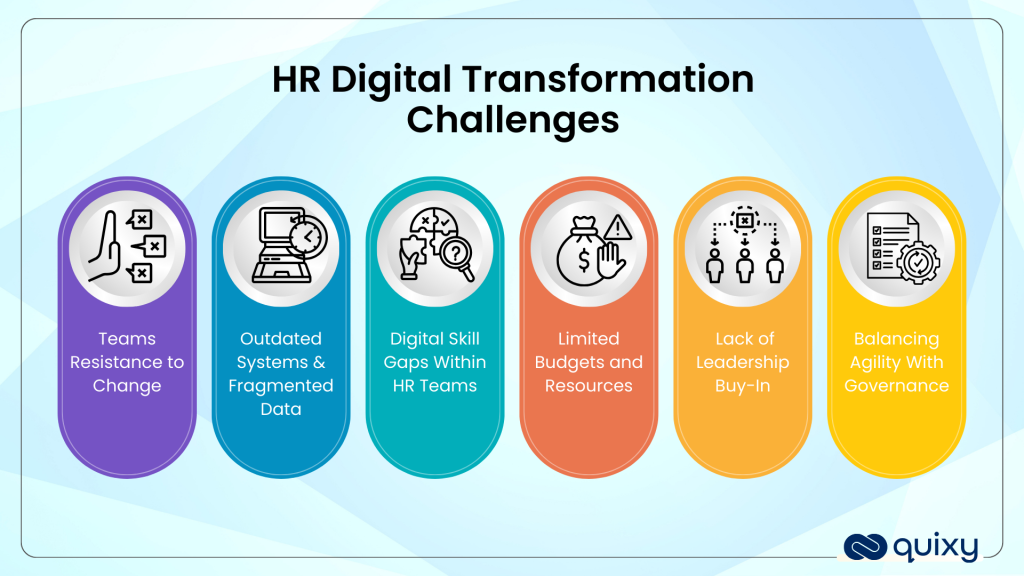
Digital transformation is creating a generational divide among employees: “digital natives” who grew up in a connected world, versus “digital immigrants” who have to adapt to a changing workplace.
Among the “digital immigrants” are many leaders and top managers. HR needs to bridge this digital divide in a way that enables all the people in an organisation to excel and contribute.
In a MERIT masterclass in Amsterdam on 16 October 2019, Teresa Ramos Martín, director of the Technology and Innovation programme at IE University (Spain), revealed how HR can drive transformation without exacerbating thе digital divide. The exclusive C-level event brought together HR and L&D leaders from companies such as HPE and Signify on a beautiful morning in Amsterdam.
“The biggest challenge is with our top people”, Ramos said. She highlighted the ineffective talent management strategies that are currently being used for digital immigrants. The masterclass demonstrated that the problem of digital transformation and top management has a human, rather than a technological solution: HR executives need to take the lead and facilitate some difficult conversations.
How not to drive digital transformation
Ramos shared that she, herself, is a digital immigrant: she remembers experiencing the internet for the first time when working in British Telecom’s research labs. Ramos retired early from her career in telecommunications, as did many of her colleagues, making way for younger talent. This made her aware of a major problem with digital transformation.
“Something that I see happening is companies getting rid of top managers that reach a certain age in favour of younger talent that are digital natives,” Ramos said. This approach is far from optimal, “because there is all this human capital going to waste.”
Further, eliminating top talent who are digital immigrants is detrimental to an organisation’s culture and climate. This approach “results in top management feeling really lost… they are really scared because they see their job is on the line, and their egos are on the line”. As their junior colleagues are leading them on technology, some top managers are asking themselves what their own value is.
Yet, Ramos argued, senior talent’s value is critical to the company. “Leaders have the historical background of the organisations in their heads”: they are a source of identity. Over the years, they have had the chance to learn from mistakes and have developed a more critical mindset. Top managers “know what technology is good for and is not good for.”
Today, major tech companies like Facebook are increasingly criticised for assuming that more technology is always good. Experienced talent are the ones who can provide a strategic vision that goes beyond catching up with the newest trends.
Excluding non-tech-savvy talent is doing a disservice not only to digital immigrants but to digital natives, too. As top management is sent into retirement, “Young talent are being overpromoted to roles that require a lot of responsibility. All of a sudden, they see that they are in jobs that maybe they aren’t so ready to take on. And we expect them, like a kind of Superman, to… come out a fully fledged leader ready to take the organisation forward.”
As a result, many digital natives are also “feeling lost”. That is because organisations are not leveraging the value of experienced leaders who have non-digital skills such as resilience, dealing with frustration, managing conflict, and taking the longer view.
HR’s role in the face of this digital and generational divide is to create an environment where both sides can contribute.
What is digital transformation, anyway?
As a model for retraining digital immigrants, Ramos gave masterclass participants a crash course on the digital revolution – no small feat in the span of ten minutes. She provided an accessible, jargon-free overview of digital technologies and how they stack together.
The digital revolution has changed the ways we 1) gather data, 2) transport it, 3) store it, 4) secure it, and 5) process it and find meaning in it. Each step of this value chain is disrupted.
- More data is available than ever before, thanks to new technologies including mobile phones, social media, and the internet of things.
- Transporting the data is also much faster thanks to technologies like 4G and 5G, which have low latency. This means that data moves in an orderly way, in chunks that are quickly reassembled.
- All this data is easy to store once it arrives, thanks to cloud computing. As Ramos quipped, “The cloud is nothing else but somebody else’s server.”
- Then comes securing the data. Blockchain, Ramos explained, is a way to store information so that you can track each “block” and therefore trust it.
- Once data is gathered, transported, stored, and secured, it needs to be processed. Here, Ramos argued, not that much has changed. “Big data is what in our days used to be called probability and statistics – this is just a glamorous name for it.”
- After data has been sorted and analysed, AI can find meaning in it, helping us see what part of it matters and why.
Ramos’s recap of the digital revolution, worthy of a viral Twitter thread, demonstrated that digital technology is nothing to be apprehensive about. Everyone can grasp it.
Getting comfortable with agility
But it is not only information gathering, storing, and processing that digital transformation has disrupted. It is also impacting organisational structures, compelling everyone to become more agile.
In a game involving dozens of tennis balls, masterclass participants discovered for themselves how teams and organisations respond in an uncertain, changing environment. Under such conditions, there is no single decision-maker – instead, everybody contributes. Different leaders emerge depending on the situation; everyone is open to ideas about what can be done differently.
Agility is “the new way of working – this is where companies are going,” Ramos said. Masterclass participants agreed that “everyone is doing agile.”
Agility may not come naturally, however, to top management who are used to a more hierarchical structure. “Top talent are used to ‘information is power’, and now everybody has the information,” Ramos said.
Top managers may be feeling insecure about the new flat hierarchy, dynamic processes, and “servant leadership” style in which leaders facilitate debate, rather than devising solutions. Executives who came of age in a different era and climbed a corporate ladder to get to their position may be resistant to transformation, digital as well as personal.
Embracing a personal digital transformation
Digital transformation is putting HR professionals in a delicate position with regard to top management: they have to solve a problem for people who may not be aware or acknowledge that a problem exists.
“I find that that’s a very difficult topic to approach,” said Ramos. Top-level executives “are not used to showing weaknesses; they are not used to coming to HR and saying, ‘Look, I feel insecure, I feel I have a gap and I need support.’ And it’s also not usually the case that HR approaches them and says, ‘Look, I think you really need to develop these skills.’”
HR can help indirectly by fostering a learning culture and a safe environment where trying new things is encouraged.
But direct intervention is also necessary: HR professionals need to address the “elephant in the room” and speak to top managers about their technological blind spots. Ramos advises that HR approach top managers individually. Solutions should be “made to measure”, developed for and with each person.
HR’s task, Ramos said, is to encourage top managers to begin their own “personal digital transformation”. HR should listen to executives’ preferences and values. Questions to ask include, “What kind of digital leader do you want to become? Is your personal digital transformation going to be about technology, or about leadership style?”
If top managers prefer not to retrain or gain new skills, a consulting role or one coaching junior colleagues may be a solution. Supporting executives in mapping and undertaking their own transition can empower and motivate them.
The solution is to “start asking the uncomfortable questions”. Top managers can be brought into a more agile culture through a personal, sympathetic approach. HR can start closing the digital divide, one conversation at a time.
Don’t miss the upcoming C-level MERIT events – join us to share your perspective and learn from experts and peers. To find out more about our Leadership Community and the next important topics we will tackle, contact us here.
By Ani Kodjabasheva
Estudiar un semestre en una universidad extranjera ha sido su gran sueño en estos últimos 3 años.
Curiosamente, cuando hace un par de meses llegó el momento de la verdad, empecé a ver una realidad distinta. Lo único que tenían que hacer estos nativos digitales era subir los programas de estudio que quieren cursar a una plataforma informática; es decir, tenían que guardar un archivo en una página web.
Pensé que sería un proceso fácil dado su interés y su edad. Se los expliqué con unos meses de antelación y no hubo dudas ni preguntas. Sin embargo, unos meses después, solo una alumna había subido los programas. Otros alumnos me los habían mandado por correo electrónico. Les respondí que el proceso oficial exigía subirlos a la página web.
Escucha nuestros podcast aquí
Lo último
- ¿El SAT vigila las transferencias bancarias? Cuidado con el concepto que das a estas operaciones
- Hoy No Circula 1 de octubre 2025: qué autos deben quedarse en casa este miércoles en CDMX y Edomex
- La Ciclovía Gran Tenochtitlán sortea obstáculos y avanza rumbo al Mundial 2026
Meses después seguía sin haber programas de estudios en la página. Me empecé a preocupar. ¿Habría algún error informático? ¿Estaría mal el sitio web?
Compartí esta preocupación con algunos colaboradores y empezamos a hacer pruebas. Todo funcionaba a la perfección.
Pasaron los meses y seguía sin haber actividad por parte de los alumnos. La página web continuaba vacía. Yo estaba cada vez más preocupada por su inexplicable falta de interés. Si seguían así, no iban a poder irse fuera por no aportar la documentación necesaria en los plazos requeridos.
Preocupada, le pregunté otra vez a la alumna que sí había subido los documentos ¿Qué había pasado? Su respuesta me dejó sin palabras. Seguían teniendo interés. El problema era otro: no sabían cómo usar la página web.
Estos nativos digitales, incapaces de pasar un par de horas sin sus smartphones, entraban en la página y se sentían asustados. Aunque la página es muy intuitiva, ellos se perdían y abandonaban.

How To Coach Agile Leaders: Lessons from 10 Years as Scrum Master
You may have heard of the term «Agile» being used a lot in business lately. It seems like everything, and everybody needs to be “agile.” If you’re not “agile,” you’re nobody!
But what does “agile” mean? What does it mean to be an agile leader? And what do we, as coaches, need to pay attention to when coaching agile leaders?
Agile and agility come from agile methodologies. So, let’s start with a brief history:
Back in 2000, the digital revolution had already created a world of high volatility, uncertainty, complexity, and ambiguity (VUCA). The pace of change was so fast and unpredictable that traditional ways of working were not effective anymore. In this environment, a group of 17 software developers became frustrated with the traditional approach to work; which was often slow, cumbersome, and inflexible. They gathered to discuss new ways of working to stay ahead in the new digital world.
As a result, they developed the “agile thinking,” captured in the famous “Agile Manifesto, (Beck et al., 2001) based on principles of adaptability, flexibility, and collaboration. Agile thinking is not only about speed. It is also about simplifying, being flexible, and adapting quickly to change. It materializes in a set of methodologies that emphasize collaboration, communication, flexibility, and continuous improvement.
The main idea is that software development is an iterative process. Teams use short cycles of development and feedback to quickly identify and address problems. This allows them to quickly adapt to changing customer needs and respond to feedback. Additionally, agile methodologies place an emphasis on collaboration, enabling teams to quickly identify, and address problems before they become too large to handle.
It has several benefits. First, it allows teams to adjust to challenges and changes as they occur and address them at early stages. Second, it increases performance and customer satisfaction. Third, it enables customers to see tangible results frequently.
Agile thinking can be applied to any area of business. As a result, agile methodologies have become increasingly popular with corporations, boards, executives, and leaders in all industries.
Summary:
Agile is a mindset, a way of thinking that originated in the software development world to adapt to the rapidly changing and highly uncertain environment created by the digital revolution. The main ideas at the heart of agile thinking are:
- Work in short iterations that provide teams the necessary flexibility to quickly react and adapt to change.
- Emphasis on collaboration and communication to quickly identify and address problems before they become too large to handle.
The Agile Leader
Agile leadership is a style of leadership that emphasizes the ability to rapidly adapt to changes and unexpected challenges. Agile leaders are adaptive, open-minded, and able to work in a team. They are willing to experiment, take risks, and be open to feedback. They can listen well, build trust, and collaborate. Are able to quickly pivot and make decisions in the face of uncertainty. Agile leaders are often described as being «flexible,» «adaptable,» and «responsive.”
Some key characteristics that define an agile leader are:
Flexible Vision: An agile leader has a clear vision for what they want to achieve and can articulate it and inspire others to buy into it. This vision is firm enough to make decisions and maintain focus when things get tough and, at the same time, flexible enough to adapt as circumstances change.
Radical Collaboration: An agile leader knows they cannot have all the information and all the answers. They are strong communicators, build trust, work effectively with others towards common goals, and compromise when necessary, and are open to input and feedback.
Extreme Agility: In today’s ever-changing world, the most successful leaders are comfortable with change and uncertainty and can adapt and change course when necessary. They are flexible in their approach, learn from mistakes, and constantly look for feedback and ways to improve.
The Challenges of Agile Leadership
The business world is increasingly embracing agile approaches for the many advantages they offer. However, there are also challenges to agile leadership.
The main challenges are related to identity and value add.
Identity: More traditional leaders who have invested years and energy refining a leadership style based on authority and rank may experience difficulties exploring an agile leadership style. Agile leadership is radically different to the more authoritarian styles that have taken them to the top, and letting go of the old paradigms may prove challenging.
Value add: Senior leaders may equate adding value with having all the information, providing all the answers, and making all the decisions. They may experience difficulties when changing to an agile style and becoming facilitators who enable teams to gather information, provide answers, and make decisions.
The shift from traditional to agile leadership can seem intimidating, but with a better understanding of both paradigms, senior leaders can start making the transition and see the benefits in their teams.

Unlocking Potential: How Artificial Intelligence Can Help In Executive Coaching
Gone are the days when artificial intelligence (AI) was just a fascination for tech enthusiasts (AI: 15 key moments in the story of artificial intelligence, n.d.). In recent times, we’ve seen AI make a massive impact on the world, revolutionising the way businesses operate. Everyone is eager to see what’s coming next in this dynamic field.
There’s been much debate (and panic) around AI potentially taking over our jobs. As executive coaches, we may wonder if algorithms will attract our clients away from us, thus rendering us jobless. However, what if AI and coaching could work together in perfect harmony? If this were the case, how might we benefit from incorporating this technology?
Continue reading to discover how the power of AI could help take our coaching practice to the next level of excellence.
What Is AI and how does it work?
Artificial intelligence (AI) is an exciting field of computer science that emerged in the United States during the 1950s. (Anyoha, 2017; BBC, 2023; Javapoint, n.d.; Roser 2022).
The purpose of AI technology is to create machines that can perform tasks requiring human intelligence like understanding language, recognizing patterns, making decisions, and learning from data sets (Biswal, 2023; Brookings Institution, 2018; Daley 2023; European Parliament, 2023). AI uses algorithms, data, and computer programs to mimic intelligent behaviour and provide solutions to complex problems. These powerful capabilities are utilised in a wide variety of applications such as speech recognition in virtual assistants like Siri, facial recognition on smartphones, medical diagnosis, self-driving cars, and personalised recommendations on platforms like Amazon and Netflix. AI technology is an amazing tool that has revolutionised how we live, work, and play.
How does AI work?
In traditional programming, programmers provide machines with detailed step-by-step instructions that guide them toward a specific action (European Parliament, 2023). The programmer already knows how to solve the problem and provides this knowledge to them in the form of rules and steps, which are called an «algorithm». The machine receives these detailed rules from the programmer and, following them, provides solutions to any problems it is given.
In contrast, in artificial intelligence (AI), the programmer does not give the machine the rules and steps necessary to solve the problem (Gkionaki, 2021). Instead, the algorithms involve giving the machine a goal and some examples to use as a reference. The AI machine then explores various solutions until it discovers the processes and rules to achieve the desired result.
An example of this is image recognition, a task that AI can perform better than a «traditional» program. To achieve this, a programmer can provide AI with a set of example images of what they want, along with a set of images of things they don’t want. Then, the AI can learn to recognize the desired images based on these examples. For instance, imagine we want a program to recognize images of cats. It would be impossible to write all the rules and steps needed for the machine to recognize cats in different positions, colours, breeds, lighting conditions, etc. Instead, we can provide examples of images of cats in different positions, colours, breeds, and, additionally, examples of dogs, horses, and other similar animals. The machine then uses these examples to produce its rules for recognizing cats.
Integrating AI Into Executive Coaching Practices
There are some fields where AI is already providing great benefits, which could be extended to coaching (Anyoha, 2017; Biswal, 2023; European Parliament, 2023):
- Automate Coaching Sessions: From scheduling appointments, transcribing notes from meetings, sharing resources, tracking progress in between sessions, AI can do the work to free up time for coaches to focus on more high-value tasks (Biswal, 2023; European Parliament, 2023).
- Assessments: AI can provide initial assessments of skills and competencies in a fraction of the time. Later in the coaching process, AI can also help identify skill gaps in clients and offer personalised development plans, suggesting upskilling opportunities in areas that may not have been apparent in the initial assessment (Biswal, 2023; European Parliament, 2023).
- Tracking: AI can help coaches measure results to enable successful tracking of progress and outcomes. This is a helpful way to measure the effectiveness of the coaching process (Anyoha, 2017).
- Facilitate Client Growth: AI has the capability to produce simulations that allow clients to experiment in realistic ways with various solutions without making costly mistakes in real-life situations. Simulated settings provide an opportunity for clients to learn and grow without any risk or detriment, creating a safe and secure environment in which to explore and stimulate thinking (Anyoha, 2017).
- Customization & Personalization: AI helps personalise content for each client based on their individual needs and goals, making recommendations for resources, or connecting them with other experts in their field that could help support their growth (Biswal, 2023).
- Democratising Access to Coaching: AI can make coaching more accessible for all types of leaders. Whilst no artificial intelligence can be a substitute for the human connection and expertise, AI-based platforms can help democratise access to executive coaching and benefit a wider range of individuals (Anyoha, 2017; European Parliament, 2023).
Benefits of AI in Executive Coaching
AI can truly revolutionise executive coaching by empowering coaches to provide their clients with even more outstanding support. Here are four key advantages AI offers when it comes to executive coaching (Anyoha, 2017; Biswal, 2023):
- It can boost customer experience for both coaches and clients.
- It can generate data-driven insights, providing coaches with valuable information to assist their clients and HR departments with a better understanding of the impact of coaching.
- It can improve workflows by automating administrative tasks, freeing up time for coaches to focus on their clients’ needs and build more engaging relationships.
- It can enhance productivity by analysing vast amounts of data to identify trends and help coaches develop more effective strategies for their clients.
When used properly, AI is not just a valuable tool but an ally, helping coaches provide better support for our clients.
Consequences of AI in coaching
While the integration of AI into executive coaching brings exciting possibilities, it’s important to consider some unintended consequences that may arise (Anyoha, 2017; Biswal, 2023).
One potential consequence is the risk of relying too heavily on AI tools and platforms, which could reduce the human connection between coaches and clients. We must remember that coaching is a personal and empathetic practice that thrives on human interaction (Anyoha, 2017).
Another consequence to be mindful of is the ethical implications surrounding data privacy and security. As AI collects and analyses vast amounts of data, it’s crucial for coaches to prioritise the protection and confidentiality of their clients’ information (Biswal, 2023).
Additionally, there might be concerns about job displacement for coaches as AI automates certain tasks (Anyoha, 2017). However, it’s essential to highlight that AI is meant to enhance coaching, not replace human coaches entirely.
Striking the right balance between leveraging AI’s capabilities and preserving the unique value of human coaching expertise will be key to successfully navigating these unintended consequences.
Conclusion
AI is an emerging technology that has the potential to revolutionise executive coaching. To fully maximise its benefits, it’s essential to make ourselves familiar with it through the freely available tools and resources (Anyoha, 2017; Biswal, 2023).
This article has explored how executive coaching can benefit from incorporating the power of artificial intelligence. It’s important to note that while AI can enhance the human touch, it’s not intended to replace it. Rather, by leveraging AI, we can take our coaching practices to new heights of excellence for our clients and ourselves.
Embracing the potential of AI in coaching opens up new opportunities for growth and success for ourselves and our clients. If you want to take your executive coaching to the next level, leveraging AI’s power can help.
This article explores the positive outcomes of a mentorship under the UNDP Women in STEM program. In the first part of the article, Gunash Kamzaevi, a UX researcher in a call center software team at a bank, talks about the difficulties she faces when implemented changes, some of them requested by users. In the second part of the article, mentor Teresa Ramos explains the 5 stages of grief and how a software team that works using agile methods can use them to easy the implementation and uptake of changes by users.
The story shares practical lessons learned in this mentorship process, giving valuable insights for people in the tech and project management world.
Summary
Embarking on a UX research journey within a call center software team, the struggle to facilitate user-friendly changes became evident. Users, initially resistant and disheartened by modifications, exhibited an emotional journey akin to the “5 Stages of Grief” model. Introduced by Elisabeth Kübler-Ross, this model encapsulates stages of denial, anger, bargaining, depression, and ultimately, acceptance. Through the lens of these stages, users’ reactions were mirrored: resistance, frustration, bargaining for old features, despondency, and eventual acceptance. To navigate this terrain successfully, it’s imperative to respect these stages, embrace empathy, communicate transparently, and grant users the time needed to progress through these emotions, ensuring a smoother transition and heightened user satisfaction.
Being Agile: From users’ perspective
Gunash: When I began my journey as a UX researcher within a digital software team at a call center, I initially underestimated the gravity of the situation. My task was to delve into the software’s usability, a venture that involved visits to call centers for observations and agent interviews. Two skilled UX designers accompanied me during this research endeavor, but the results were far from satisfactory. Right from the outset, we encountered an overwhelming sense of negativity towards the product team. Call center agents were not only frustrated but also disinclined to offer assistance. Comments like, “What’s the point? They’re not going to do anything anyway,” and “I reported this bug weeks ago, but it seems no one cares,” were frequently heard. The agents were uncooperative and felt unheard.
Moreover, significant communication issues loomed large between the software team and the head of the call center department, the stakeholders. The call center comprised roughly 200 agents, with the most experienced ones working remotely while only interns or freshly recruited agents were in the office. This introduced a research bias since I had to conduct face-to-face interviews at the office, primarily obtaining feedback from interns who didn’t have access to all facets of the software. Initially, with the assistance of the two designers, it took us a considerable amount of effort, spanning one or two full days, to persuade agents to participate in interviews. In the end, we collected a mere 20-25 responses, most of which were not particularly helpful.
In response, I decided to forge a robust communication channel that would encourage users to freely share their feedback. This ultimately brought us to a point where I could conduct research online with nearly full attendance from all agents, enabling them to share their insights without constraints…

[So when it comes to your jump from technology into coaching, how did that happen?]
Yeah, it’s not the most obvious one, is it? My background is in technology, but it was always abroad. So even though I’m Spanish and I studied here, I moved to the UK and to Germany. I was working abroad for 22 years, always in technology. When I came back to Spain to work in technology the culture shock was so big.
I was struggling so much with the Spanish culture because even though I’m Spanish, I had never worked here. They got me a coach and my experience with coaching helped me realize, that’s what I want to do.
I want to help people be happier at work and be more productive. My going into coaching was part of my desire to help people not to struggle as I was struggling.

[What type of struggles do you often work with, with your clients?]
The kind of questions are, what do I want to do now? What makes sense for me? What would give me a sense of feeling of fulfillment and a sense of purpose?
I do a lot of intercultural coaching. So people moving countries and working with different cultures and wanting to settle in and make the best of the new opportunity in the different country. I do a lot of work with people in technology because coming from technology, we tend to have a particular way of communicating.
I do a lot of working with women and that work includes being more credible, getting ready for the next promotion, having executive presence, and how do you deal with being the only woman in the room. Which is something that happens very often, especially in technology.
[What are some of the unique challenges that the woman your coach are facing?]
One of the main issues, particularly for women, is what is my own leadership style? When you’re a man, you can always look up to somebody and say, I want to be like him. When you’re a woman, it’s very difficult if you don’t have a role model.
So who is your role model? What kind of leadership style do you want to have? What are your strengths? What are your weaknesses? How do you want to work? I do work a lot on finding and developing your own leadership style.
[How has the Institute of Coaching as an organization impacted your coaching career so far?]
Coaching can be a very lonely job because although you work with clients, you’re on your own. So the IOC has given me a sense of community, a sense that there are people I can go to. There are people I can talk to who would understand my challenges. I feel very much at home.
[How do you see technology and coaching in integrating?]
I think that technology is everywhere in our lives and it’s going to be even more so in the future. Now, with the big boom of A.I., if we want to become better coaches, we need to embrace A.I.. The question is not whether or not we embrace A.I. The question is to what degree do we want to embrace A.I.?
A.I. can function as a scheduling tool, so I can organize meetings faster and more efficiently. It can take notes from the meetings. It can even be helping you in your sessions. A.I. has been in our lives for a long time. It’s only now that we are becoming more aware of it because of the big boom with ChatGPT.

[What are your thoughts for coaches who might be nervous about A.I.? How would you suggest they learn how to integrate it to a degree that they feel comfortable with?]
We all feel nervous with technology and we all feel nervous with things that we don’t know. When we start playing a game that we have never played before, we are nervous and excited. So my advice is playful curiosity, play with it. And then the next question would be, How do I play with it? How do I get to play with it?
If you know somebody who can teach you how to start Chatgpt. Get them to sit with you and have half an hour, how to register, get your own account and start writing. And once you have that, then you go into YouTube and there are thousands of videos just telling you what you can do with it.
You need to give it some time. It’s not like you’re going to learn everything about A.I. in 5 minutes, but you’re going to learn about how to write simple commands. That’s good enough to be curious.
Be curious about what you can do with A.I. and what it can do for you. Our clients are going to be using A.I.. So how are you going to be able to coach them if you are scared of what they are doing?
[What is an Agile leadership or how do you coach a team to be agile?]
Agile is a methodology that comes out of technology, out of software development. The type of technology that is hitting everybody now, was hitting technology 20 years ago.
Some software guys got together and were talking about how they could be more effective in the world. Technology was and is moving really fast, with change happening faster and faster and our world is getting more and more complex.
That was the birth of Agile. How can we do our job without wasting time? This philosophy is about how can you adapt to change, how can we be effective and efficient, even in a very complex and changing environment.
The principles of Agile are about how you work with people, how you interact, and how as a team we can be very effective. The challenge with this style of working and this style of leadership is that it is totally opposite to the way of traditional command and control.
But when you want to implement agile principles into companies, you’ve got to work with leaders and executives who have invested all their lives in the typical model of leadership now having to change completely. Having to enable teams to make decisions, self-organize independently. It’s very difficult for leaders to make this change in their thinking style.
[What is a step as a coach that you make to prepare leaders to make this big adjustment?]
I think in my view and in my experience, it’s a problem with what is your identity and how do you add value? Because your identity as a leader, if you have been working for 20, 30 years to climb the corporate ladder, your identity is, you are the person who solves problems. You are the person who makes decisions.
You are the person who is right and you are the person who tells everybody what’s what to do. Agile leadership says, you are not the person. You are the person who enables your team to do all this.
You have to build on collective intelligence. If you have a team of ten people, ten heads and ten brains are going to be more powerful than one head and one brain. Even though as a leader you can be very intelligent, very bright.
So I help leaders create a new identity. Who are you going to be as a leader now that you’re the one who empowers your team, who creates an organization that can organize itself, that is empowered, that makes decisions? You are the one who enables that. Who are you? What’s your identity?
And then we get back again to the point of role models. It’s important that we have agile leaders who can serve as role models for future leaders. Who are you going to be a leader and how are you going to add value to the company and to the organization?
[What is your favorite part right now about coaching?]
I love when you first meet a client and sometimes they come to you …and I’m just thinking of a new client I had a couple of weeks ago. And she came to me and she was really, really struggling and she said, “Do you think you can help me get this right? I don’t know what else to do.”
And that moment when somebody comes to you and you say “Okay, you’ll be fine. I know you will be fine.” And that’s something that as coaches we have this power of believing in people and helping people believe in themselves.
So when somebody comes to you and they say, “Look, I’ve got this huge problem, I don’t know what to do, can you help me?” And you go, “Yes, yes, I can help you. You will find the solution, but I can help you get there.” And you already see that light in their eyes when they go, “Oh, I can get this, I can get these.”
I love that moment when you see the person in front of you thinking, “Oh wow, there is a way out!”
Being able to create the space and to witness somebody do that. I think that’s the greatest privilege that we have.