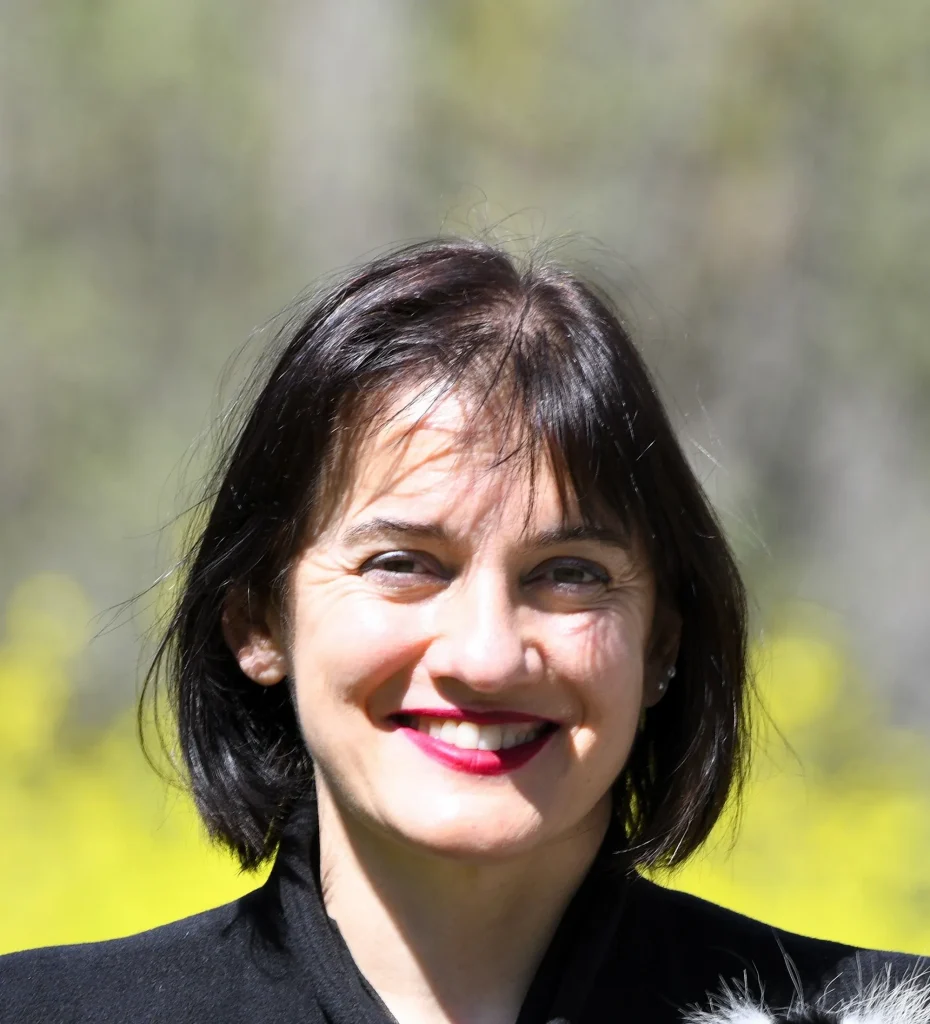
he world of coaching is undergoing a seismic shift, with emerging trends set to redefine its boundaries and possibilities. From digital transformation and the integration of artificial intelligence to the growing emphasis on mental health and the global rise of coaching cultures within organizations, these developments are reshaping the landscape of personal and professional growth. As we navigate through these changes, understanding the forces that drive the future of coaching becomes paramount. I had the pleasure of interviewing Teresa Ramos.
Teresa Ramos is a seasoned leader with a diverse career spanning over 23 years in executive roles at top tech companies like British Telecom, Vodafone, Telefónica, and Siemens Group. She has driven digital transformations, enhanced organizational agility, and fostered innovation within and across departments.
After her extensive commercial experience, Teresa transitioned to academia, collaborating with leading institutions such as IE (Instituto de Empresa), d.school at Stanford University, and IoC at Harvard University. Her focus in academia has been on innovation, agility, leadership, digital transformation, and high-performance teams.
Currently, Teresa works as an executive coach and digital consultant, collaborating with prestigious organizations such as the United Nations, OECD, NHS, and a number of FORTUNE 500, FTSE100, DAX40, and IBEX35 companies, helping executives and companies navigate the complexities of the digital world and thrive in our fast-evolving, technology-driven landscape.
Thank you for joining us. To start, could you share your “origin story” with our readers? How did you begin your coaching journey, and what challenges did you face in the early days?
My first career was in technology. When I finished my first degree in theoretical physics (yes, I know… quite unexpected!) I moved from my native Spain to the UK for what was intended to be a brief 6-month internship at British Telecom. However, this experience evolved into an exciting 22-year executive career, during which I led teams globally for industry giants such as British Telecom, Vodafone, Telefónica, and Siemens.
When the company I was working for in Germany was bought by a Spanish company, I received an offer to return to my home country. However, transitioning back to Spain after spending over two decades abroad presented unexpected challenges. Having never worked in Spain, I did not understand the Spanish culture, the Spanish business language or the Spanish business etiquette!! This was deeply frustrating. After spending 22 years dreaming of “going back home”, moving back was extremely hard. After a few months and many deep conversations with family and close friends, I realized I didn’t want anyone to experience what I was going through. I wanted to help people thrive and be fulfilled at work so I decided to leave corporate life and retrain as an executive coach.
The main challenges I faced were changing my work identity and rebranding. When I left corporate life, I was responsible at a global level for Big Data in Telefonica, one of the top players in telecommunications. My whole network, both personal and professional, saw me as a technologist. It took me some time to create my new work identity.
Initially, it felt as though I had to choose between my tech and digital background and my new career as an executive coach. Over time, this unique combination offered a perspective that proved invaluable. Clients started to value the very rare blend of tech and digital expertise alongside my skills in coaching and leadership development. It took time and patience before the mix became increasingly sought after and now it is part of my unique value proposition.
You are a successful business leader. Which three character traits do you think were most instrumental to your success? Can you please share a story or example for each?
- Determination and perseverance: As a child, my family often labelled me as stubborn, viewing it as a less positive characteristic.
However, in my professional life, this trait transformed into a quality: determined and perseverant. I found myself taking over the projects that nobody else were able to successfully complete. This has been a valuable lesson in life: the perception of a trait can vary greatly depending on the context and the individuals involved, highlighting the importance of understanding different perspectives and agendas.
2. Communication holds significant power, beginning with the simple act of listening to understand others’ perspectives and feelings about a situation. The goal isn’t about winning or fixing but rather understanding You may not necessarily agree, but understanding is crucial.
Once during my technical career, I was tasked with leading a challenging global project. One of the main hurdles was a stakeholder in the APAC region, known within the company as the “Asian bulldog” due to her difficult personality and tendency to alienate others. During our initial phone call, I wrote in capital letters on my notepad “LET HER SPEAK” to remind myself to let her express herself freely. She began by expressing accusations, then moved on to complaints and blame. After patiently listening for a while, she was able to address the root of her frustration. By allowing her to vent and feel heard (even though I didn’t necessarily agree with her), we established a rapport that led to a productive dialogue. Ultimately, the project was successfully delivered, and we developed a strong working relationship.
3. Flexibility and adaptability: I believe it is vital to create a compelling vision for yourself and to have a solid plan to get there. However, it´s equally important is the ability to know when to ignore your plan and adapt to the changing circumstances and capitalize on opportunities that arise along the way.
During a master class I taught to executive MBA students some years back, a participant asked about my approach to planning my career. The professor, an old colleague of mine, was stunned when I encouraged students to take time, craft their vision and produce a plan. “I know you and you are extremely flexible, never sticking to a pre-determined plan”- she said. I replied “Having a plan helps me feel organized and in control. However, do not let a good plan stop you from making the most of the emerging opportunities and all the wonderful surprises that life will throw at you!!”
Can you share your favorite “Life Lesson Quote”? Why does that resonate with you so much?
“The only way to make no mistakes is to do nothing”. This is my interpretation of Elbert Hubbard´s: “To avoid criticism, say nothing, do nothing, and be nothing.”
It is highly unlikely that you will do something right if you do it for the first time or if you have done it before but the circumstances have changed. We live in a highly complex world that is constantly changing at increasingly fast speed. The chances of us doing something new (either because it is the first time or because circumstances have changed) are very high. It is therefore important to become friends with taking risks and learning. And learning means making mistakes and failing.
To thrive in our complex and fast changing world it is vital to redefine our relationship to failure and embrace it as a necessary step in the learning process. It is not failing; it is a step in the learning process.
What are some of the most interesting or exciting projects you are working on now? How do you think that might help people?